Background
The opioid addiction problem had a rippling effect on the community, disrupting families, straining public institutions and increasing the number of children in the foster care system. West Virginia counties with the highest rates of opioid deaths also tended to see higher rates of child abuse and neglect. The Centers for Disease Control and Prevention states that adverse childhood experiences (ACEs) like these, can have lasting, negative effects on children’s health, well-being and opportunity well into adulthood.
Henry J. Kaiser Elementary, in Ravenswood, West Virginia was profiled in the Nation Article “These Kids are Watching their Parents Die”. Principal Amber Hardman noted “a marked uptick in intense behavior problems” in these young students – “who are defiant, throw chairs and tip over tables.”
While Henry J. Kaiser had outstanding teachers and various Social Emotional Learning (SEL) programs in place, the staff felt the problems were getting worse. Many children were experiencing chronic stress associated with poverty, family dislocation, addiction, overdose death, and incarceration, that they carry complex emotional needs and lack of concentration with them into the classroom. One educator, Christy Archer said “We feel hopeless. We want to help these children read, but they can’t… because of things beyond our control.”
Opportunity
In response to the Nation Article, Inner Explorer reached out to Ms. Hardman to see if their daily mindfulness program could help. She said, "We were struggling… classrooms were taken over by behavior issues. Kids were exposed to so much trauma that they were simply not ready for academics. We desperately needed a solution and tools but we lacked resources. Just as I started to look into trauma sensitive programs, Inner Explorer found us!" Through the generosity and partnership with LG Electronics, Inner Explorer was able to grant Henry J. Kaiser Elementary School the program at no charge.
Framework
Henry J. Kaiser staff had utilized the Positive Behavioral Interventions and Supports (PBIS) framework for several years prior to implementing Inner Explorer. They continued by integrating the mindfulness components into the structure. Tier 1 is considered universal instruction. Most students in this group are “At or Above grade level” academically and have very few behavior issues. Tier 2 includes students who are “Below grade level” and/or have behavior issues that require additional supports. Tier 3 includes students who are “below or significantly below grade level” and/or have significant behavioral issues requiring one on one intervention.
Tiered approach to mindfulness intervention
- Tier 1: A universal intervention for all students and staff practicing mindfulness together daily
- Tier 2: Mindfulness practiced in small groups with Counselor/Therapist for those needing additional support
- Tier 3: Mindfulness practiced in an individual setting with the Therapist for those needing even more support
Solution
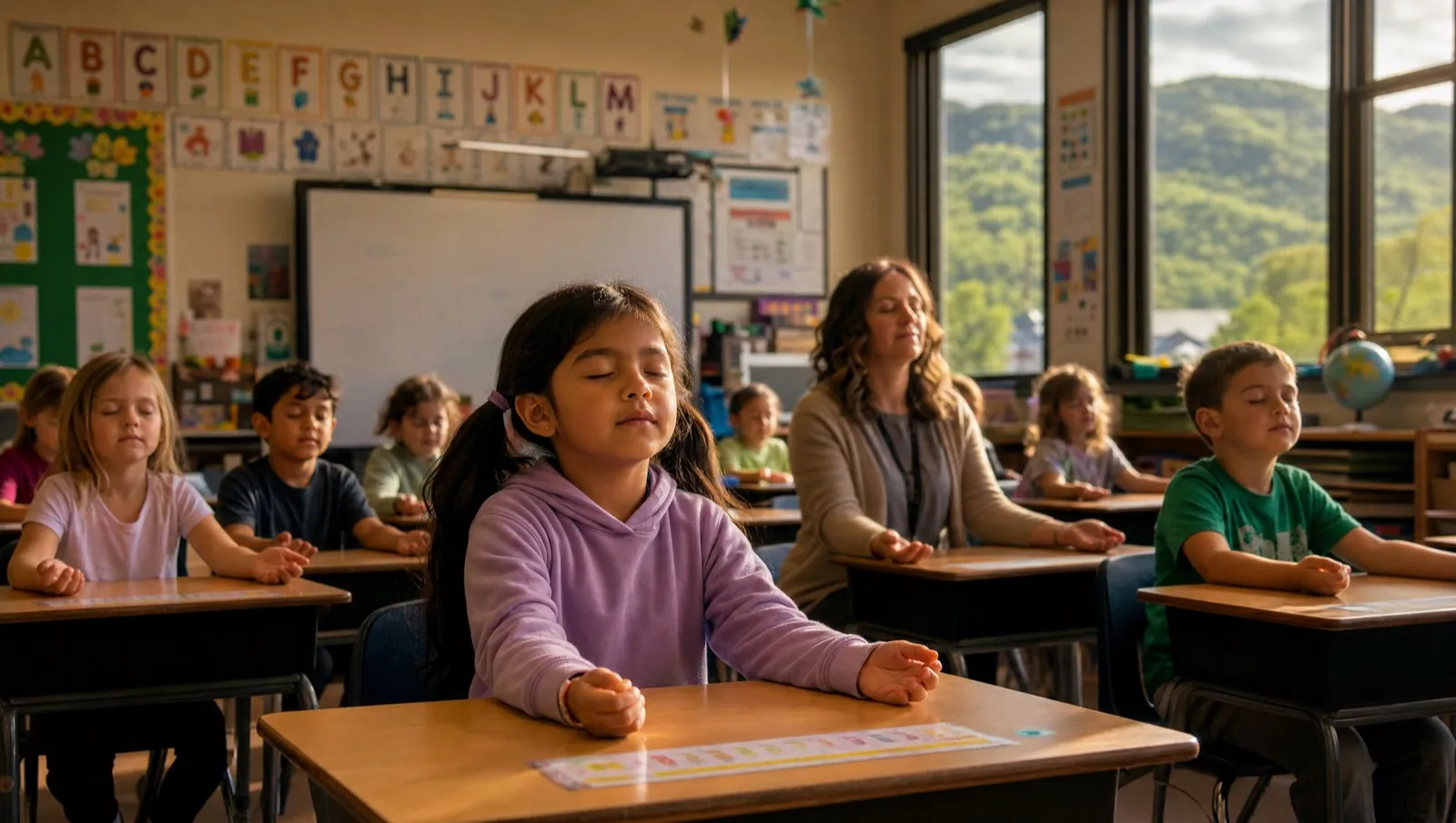
Henry J Kaiser’s principal, Amber Hardman took a student-centered approach to implementing mindfulness with all students, in the five focus areas noted below. She allocated time in the school schedule for the 10-minute practices and instructed her staff to use Inner Explorer every day to help students get to a state of educational ‘readiness’. The school-based therapist, Stephanie Majetich said, “I even used Inner Explorer in my therapy sessions with students. It creates an atmosphere that’s conducive to learning. I know students are using these skills at home too, because parents have made so many positive comments.”
- Embed Principal Hardman allocated time into the daily curriculum for Inner Explorer, making the purpose clear to staff that mindfulness was a priority. The entire school practiced together every morning.
- Champion The school-based therapist and lead teacher were selected as champions, both with interest in the approach, and built positive momentum throughout the school.
- Adopt Early adopters of Inner Explorer noticed improvements in students’ emotional regulation and attention. Teachers who had not bought in, witnessed these changes on the playground, and were grateful for the opportunity to join in.
- Change Once Inner Explorer’s daily mindfulness program was part of the routine, the positive effects on social emotional learning (SEL) and academics were noticeable and consistent. Students were more self-aware, regulated, focused and collaborative. It elevated the entire learning community.
- Model Mindfulness provided a platform for community building and for sustained human connection as students, faculty and families practiced together every day.
Impact
Discipline
| Discipline Type | March 2019 | March 2020 | 12 Month Difference | % Decrease |
|---|---|---|---|---|
| Lunch Detention | 65 | 14 | (51) | 78% |
| Suspension | 14 | 4 | (10) | 71% |
| Alternative School | 3 | 1 | (2) | 67% |
| Total Discipline Events | 82 | 19 | (63) | 77% |
Academic
According to research by the Annie E. Casey Foundation, 3rd grade reading levels predict high school graduation rates.
At Henry J. Kaiser Elementary, after practicing mindfulness for a year, 48% of students were reading at grade level, compared to only 17% the prior year.
This means that 115 more students were on track to reach this important milestone.
Cost
- Saved approximately $11,500/year as 31% fewer students needed Reading interventions
- Saved approximately $11,100/year as 30% fewer students needed Math interventions
| Before Inner Explorer | After Inner Explorer |
|---|---|
| Significant student stress and trauma | Students have the tools to self regulate and de-stress |
| High rates of suspensions and detentions | 77% reduction in discipline, improved self regulation |
| Only 17% of students ‘At/Above Grade Level’ – Reading | 48% of students At/Above Grade Level – Reading |
| Only 8% of students ‘At/Above Grade Level’ – Math | 38% of students At/Above Grade Level – Math |
| High teacher stress and burnout | Increased teacher retention and wellbeing |